Why local labeling needs a reliable printer setup
When you manage equipment and inventory close to home, labeling has to be consistent across shifts, departments, and suppliers. A durable asset label printer helps you apply readable tags that survive handling, storage, and frequent movement through a busy facility. Instead of asset tag label printer replacing faded labels, your team can rely on a steady printing process that supports accurate tracking. That reliability is especially important for warehouses, service centers, and manufacturers where assets move quickly and documentation must stay correct.
Local businesses also benefit from faster turnaround on labeling requests. Printing in-house reduces downtime and prevents delays that can occur when labels have to be shipped from out of state. You can standardize your formats for asset numbers, locations, and service notes without waiting on a batch order. With the right setup, your asset identification program becomes easier to maintain and easier for new employees to follow.
Matching print type to real-world asset conditions
Different assets face different environments, and the best printer choice reflects those conditions. For equipment that sits in trailers, workshops, or loading bays, you’ll want labels that resist abrasion and maintain legibility over time. If items are exposed godex label printer to dust, oil, or cleaning chemicals, select materials designed for industrial use. A printer that supports suitable label stock helps you avoid peeling, smearing, or text distortion that can break inventory audits.
Think about how labels will be applied as well. Some assets require labels on curved surfaces, tight housings, or metal corners, so your workflow should include reliable sizing and strong adhesion. Many teams find it helpful to print in consistent widths that fit common tag locations, such as control panels, tool cabinets, and shelving bins. When labels are uniform, scanning workflows are smoother and it’s easier to keep records clean across multiple job sites or departments.
Getting clean scans with smart label design
A well-designed label matters as much as the printer hardware. Use clear numbering rules, high-contrast formatting, and consistent placement so handheld scanners read quickly without retries. Include only the essential fields—asset ID, department, and location—so the label stays uncluttered and easy to interpret. When barcodes are printed at the right size and alignment, you reduce misreads during receiving, inspections, and cycle counts.
Many growing operations also use labels for maintenance workflows, not just inventory tracking. If your team logs repairs, calibrations, or service dates, a label can act as a quick reference point for technicians. Consider adding durability-focused design elements like larger characters for visual checks and a barcode for fast system updates. Pairing these design decisions with stable printing settings helps maintain accuracy across your asset lifecycle.
Conclusion
Choosing an that fits your facility’s conditions and scanning habits is one of the simplest ways to improve asset visibility. For local operations, printing on demand supports quicker labeling, fewer interruptions, and more consistent documentation across day-to-day workflows. When the label remains readable and properly adhered, your audits and receiving processes become easier and more reliable.
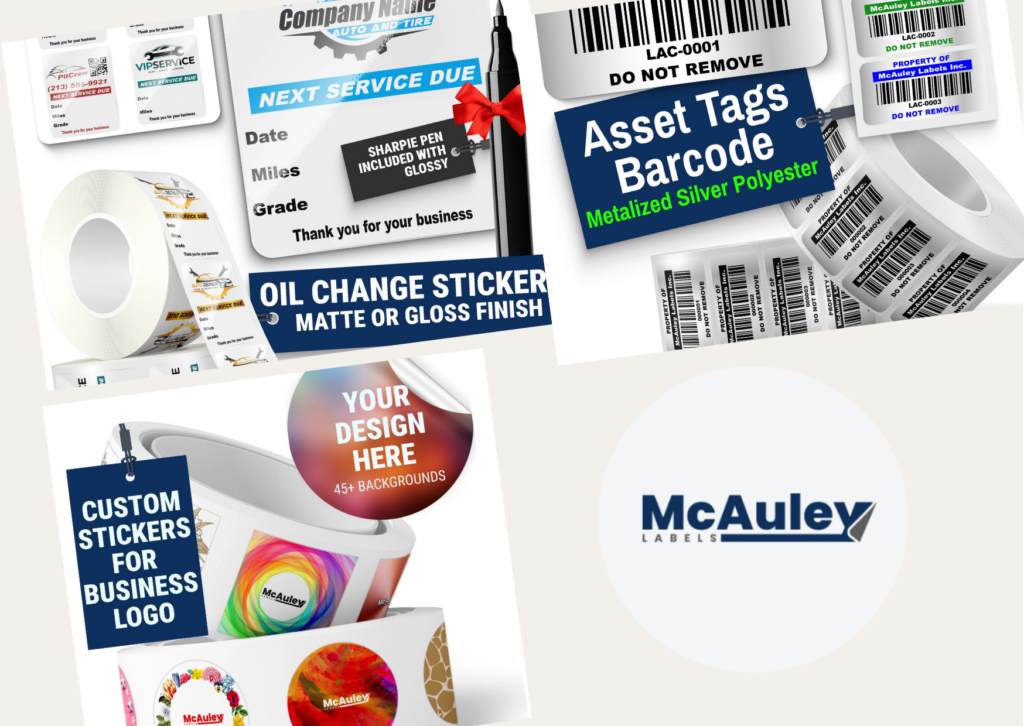
If you’re standardizing equipment identification for warehouses, manufacturers, automotive shops, or any growing team, mcauleylabels.com offers professional labeling solutions built for real use. Exploring compatible asset tag printer options from a trusted supplier can help you move from ad-hoc tags to a dependable system. Look for label materials and printer support that align with your environment so your records stay accurate and your assets stay traceable from dock to storage to service.