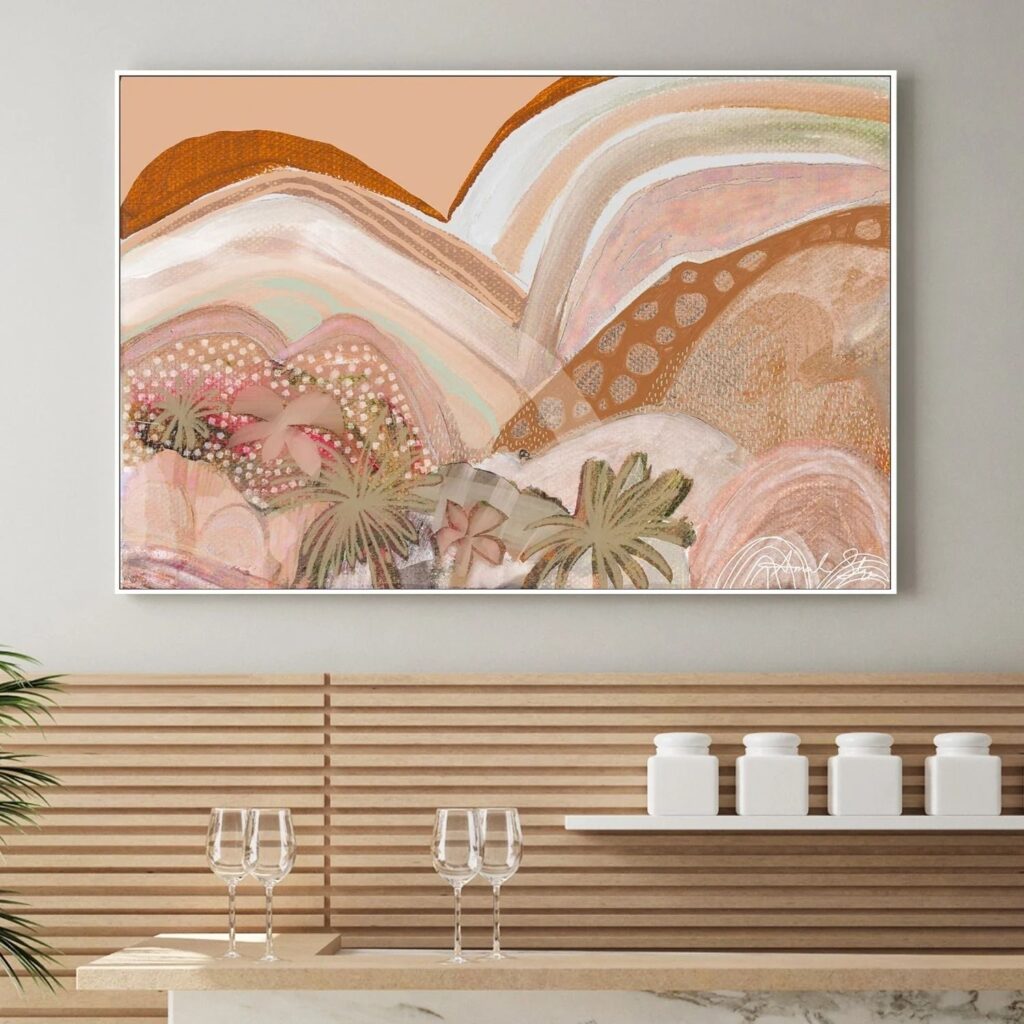
Start with the room’s purpose and focal point
Choosing the right wall art begins with understanding what the space needs to do. Decide whether the room should feel calm, energetic, or welcoming, and then match the artwork’s mood to that goal. A bold centerpiece can anchor a large canvas wall art living room, while softer coastal tones often work well in bedrooms and reading corners. Measure the wall area first so you can plan how the art will look from the main viewing spot.
Next, choose your focal point intentionally rather than treating the artwork as an afterthought. Place larger pieces where the eye naturally lands, such as above a sofa, behind a dining table, or centered on a hallway wall. If the wall has strong architectural features like windows or shelving, plan around them so the canvas doesn’t feel cramped. A thoughtful layout helps you avoid awkward cropping and improves overall balance in the room.
Pick the right size, orientation, and visual scale
Size is where most buyers either overestimate or underestimate impact. As a rule of thumb, the artwork should occupy a meaningful portion of the wall so it looks intentional, not decorative by accident. For example, a wide canvas pairs naturally with a low profile sofa, while a taller orientation can elevate a narrow wall.
Orientation should also match how the room is shaped. Horizontal compositions tend to widen a space visually and work beautifully with coastal themes that include horizons and gentle movement. Vertical compositions help draw the eye upward and can be a great option for rooms with higher ceilings. Use painter’s tape to mock up the dimensions on the wall so you can test the scale before ordering.
Finally, think about spacing and framing choices. If your canvas is stretched over a frame, keep alignment consistent with other wall elements like picture frames or wall sconces. Leave adequate breathing room around the edges so the artwork feels like a focal panel rather than a small insertion. For grouped arrangements, maintain consistent spacing between canvases to create a cohesive grid or gallery effect.
Use coastal color and theme to shape the atmosphere
Coastal wall art can do more than look attractive—it can influence how the room feels. Light blues, sandy neutrals, and airy whites often create an open, relaxed atmosphere that suits both modern and traditional interiors. If your space already has strong patterns, choose a coastal design with calmer gradients to avoid visual overload. If your room feels too plain, a textured coastal scene can add depth without requiring additional decor.
To make the artwork blend seamlessly, pull colors from nearby elements such as cushions, rugs, or curtains. Look for matching undertones, not just the same color names. For instance, a cool ocean blue may harmonize better with gray-beige textiles than with warm tan materials. When you coordinate thoughtfully, the canvas becomes part of the room’s palette instead of a standalone object.
You can also use theme details strategically. A seascape with soft waves works well for spaces meant for relaxation, while coastal imagery with stronger contrast can add drama to a dining area. Consider the artwork’s contrast level and saturation so it doesn’t fight with your lighting conditions. Natural light makes many coastal scenes glow, while warm artificial light can enhance sandy tones and create a comforting feel.
Conclusion
To choose the best wall statement piece, combine three practical steps: plan the focal point, get the size right, and align the artwork’s mood with your room’s palette. When you treat the selection like part of the interior design process, the result looks curated rather than random. Large canvases are especially effective when they match furniture scale and respect wall spacing guidelines, making the entire layout feel intentional. A well-chosen design also simplifies future decorating because other items can echo its colors and style. If you want a straightforward way to explore options, browse curated selections from gioiawallart.com and look for designs that match your space’s character. Their range is focused on creating striking focal points and elevating interiors with bold artistic style. Use the practical tips here to narrow down your choices quickly, then confirm the visual scale by mocking up the placement on your wall. With the right canvas, your space can feel more balanced, more personal, and noticeably more finished.